Why would nine monks turn down the ocean and green lands for the hardest ground on offer? Sixty years ago, the founders of Keur Moussa chose a dry patch of red earth on Africa’s western edge to begin building. Today, the same ground grows mangoes, oranges and grapefruit, and is home to a vibrant and hospitable community.
Fr François Diouf opens the door of his home for us and tells the story in this month’s Highlight of Hope.
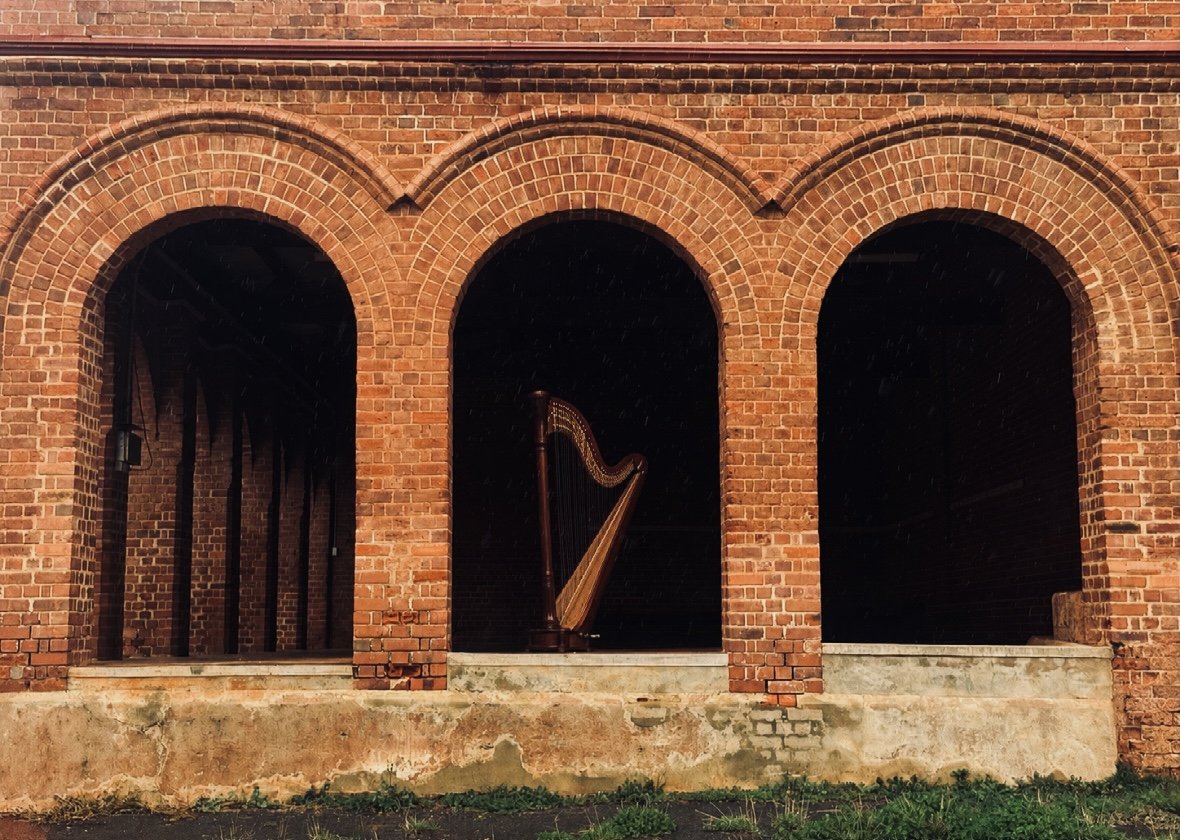
It is a quarter to five in the morning, and the bell is ringing. Outside, it is dark and already warm. The soil underfoot is red enough to stain a white habit by midday, if one is not careful. By 5:15am the monks are in their stalls for Vigils, and there is no organ. Instead, someone plucks the strings of a kora, the great West African harp, and the first psalm of the day rises within the abbey.
This is Keur Moussa, a Benedictine abbey where the Gloria is sung in Latin, the Kyrie in Wolof, and everyone is welcome. The Rule is the one St Benedict wrote fifteen centuries ago - and the way it is lived here is entirely Keur Moussa’s own.

It began with an unlikely request and an even less likely choice. In the years before Senegalese independence, the French archbishop then serving in Senegal, Marcel Lefebvre, travelled many times to the Abbey of Solesmes in France to ask for monks. Eventually, nine came. Lefebvre later broke with the Church over the Second Vatican Council, and Fr François tells the story openly.
“Not that we link to him or relate to him,” he says, but “there is a Benedictine monastery in Senegal thanks to Bishop Lefebvre, whether [we] like it or not.”
The local Church offered the monks several sites. One looked out over the Atlantic (“Very beautiful site… I wish we were there,” he says, laughing), and another was in the south, “very, very green, a lot of rain”. The founders turned them both down and chose Keur Moussa. It was “a very difficult land to grow anything” and “a completely Muslim land”, home to a small village of nomadic Fula people and families of several other ethnic groups.
Their new neighbours wondered, in Fr François’s words, “what the hell are they doing here?”
The monks answered by digging. Water was scarce, so they looked further afield and brought back drip irrigation, then being pioneered in Israel. Thin tubes circle each tree and feed water to its roots a little at a time, which is ideal for such dry land. According to Fr François, Keur Moussa was the first place in Senegal to use the technique, and the monks taught it to anyone who came to learn. The fruits of their labour are evident: mango trees and orchards flourish there today.
They noticed there was no school for the village children, so they started one, even though their congregation does not run schools. They saw women dying in childbirth with no help nearby, so they started a small hospital and invited sisters from France to run it. “Now everybody is doing these things so naturally,” Fr François says, “but the monks started that.”
He sees all of this as one vocation, not charity added on to prayer. “Life is a movement, so it’s not static,” he says. For monks, work is “equally as important” as prayer, “because it says something about the dignity of the person… You have to work for it. So you do your part and God does [his] part too.”
Today, he says, the monks and the village “are just kind of one people. We are one community.”
The welcome flowed both ways. St Benedict asks his monks to receive every guest as Christ, and at Keur Moussa the guests come from every background.
“You just have to go there for Sunday Mass,” he says. People come “not necessarily because they are Christian. They’re just there because they believe that there is something that’s going on here that is worth experiencing.”
He is quick to say the Rule cannot take all the credit. “I will not put all the credit in the monastery and in the Rule of St Benedict,” he says. “I think it is just something rooted in [Senegalese] culture and I would say in African culture.” Then he quotes a proverb: “The foreigner or the stranger is a king… You always welcome the stranger or the foreigner as a king… because you will be, and can be, a foreigner in somebody else’s land.”
And then there is the sound that greets you before dawn, which has made Keur Moussa famous far beyond Senegal.
The kora has a centuries-old lineage. It traditionally belongs to West Africa’s griots, the hereditary musicians and keepers of history. “[Keur Moussa] is really the place that allows the kora to be internationally known,” Fr François explains, “and to be played by other nationalities. Otherwise, it’s a very restricted instrument.”
At Keur Moussa, the kora accompanies the whole Divine Office, joined by the wooden balafon and the tam-tam. Mass moves between languages. A Latin introit might lead into a Kyrie in Wolof, Mandinka, Jola, Serer or Pulaar, and then the Gloria returns to Latin. “The richness is just amazing,” he says. “[It’s] an experience that doesn’t leave you without feeling the emotions.”

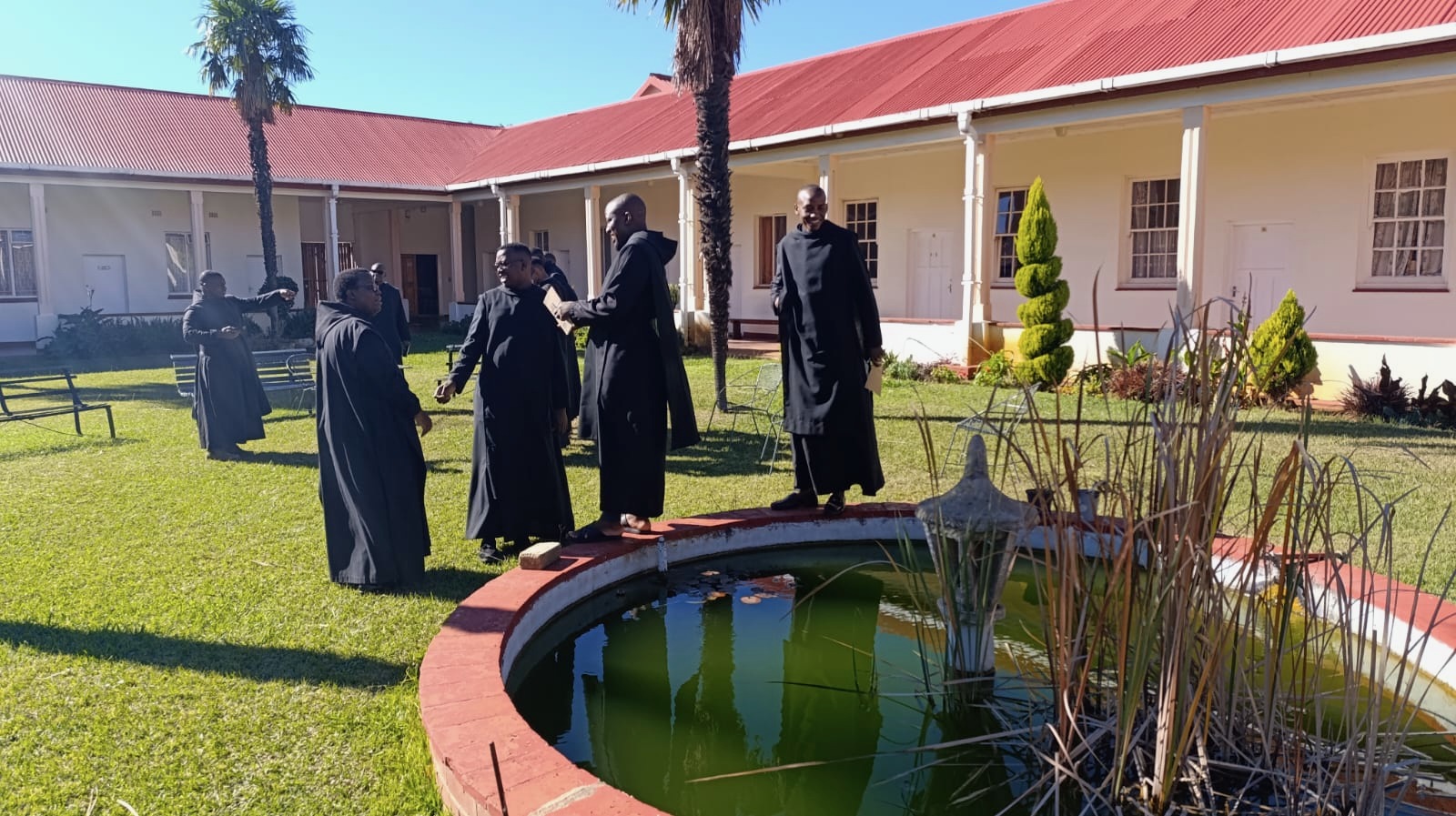
Other details show a community that has adapted the tradition to its place. The monks wear white for the “big hours” of Vigils, Mass and Vespers, and a brownish-khaki tunic for the shorter offices, because the red soil ruins white cloth very quickly. The black Benedictine habit was dropped “very early in the foundation”, he says, “for a practical reason”: the heat. Parts of Senegal can get as hot as 48°C (118°F).
The same instinct is painted on the church walls. Visitors from elsewhere sometimes walk in and get “a little shock” because in the abbey church, the figures on the great mural are African: Christ, His mother, the angels around them. For the monks and the people who pray here every day, there is nothing remarkable about that. It is simply how the Gospel looks when it is painted here.
“In our church Jesus is black, Mary is black, the angels are black,” he says. “It constantly reminds us that the mystery of the Incarnation is really about this: if God is God and He’s making Himself human, He’s making Himself human everywhere, not just in a certain way of being human.”

In Fr François’s view, the more interesting question is why a fair, blue-eyed Christ has never caused the same surprise. Across much of the world, “it even doesn’t cross the mind of anyone,” he says, not even “in the remotest part in Africa”, among people who may never have seen a white person, “because that’s how the faith was received”. “Yet in [Keur Moussa], that’s not how we were taught. That’s not our formation. And I think for me, that’s very precious.”
Finding his own culture at the heart of monastic life, from the images on the walls to the instruments he grew up hearing, has shaped who he is. It “strengthen[s] the understanding of who you are called to be,” he says, “and then however you are defined somewhere else doesn’t matter anymore, because you know who you are. I think that is something I believe Keur Moussa teaches better than any other place.”
Over sixty years, the community has become a sign of the universal welcome it wishes to extend. Fr François isn’t sure the founders planned it that way, “but I want to believe yes,” he says. The founders were French, Senegalese men joined them early, and over the years the community has welcomed people from England, Guinea, Cameroon, Gabon, Benin and Burkina Faso. And now visitors come from all walks of life: Muslim, Christian, Jewish and more.
Twice a day, after lunch and after dinner, the community comes together to “just chat and laugh about anything.” Fr François has visited monasteries on many continents, and “you don’t have that in every community,” he says.
In “a very polarised world”, he sees that mix as Keur Moussa’s real gift. “It says a lot about what we are capable of as humans,” he says. “How we can live differences respectfully without having to judge one another, without having to say that I have it best… [Keur Moussa] to me is a lab, and it’s a lab of being human.”
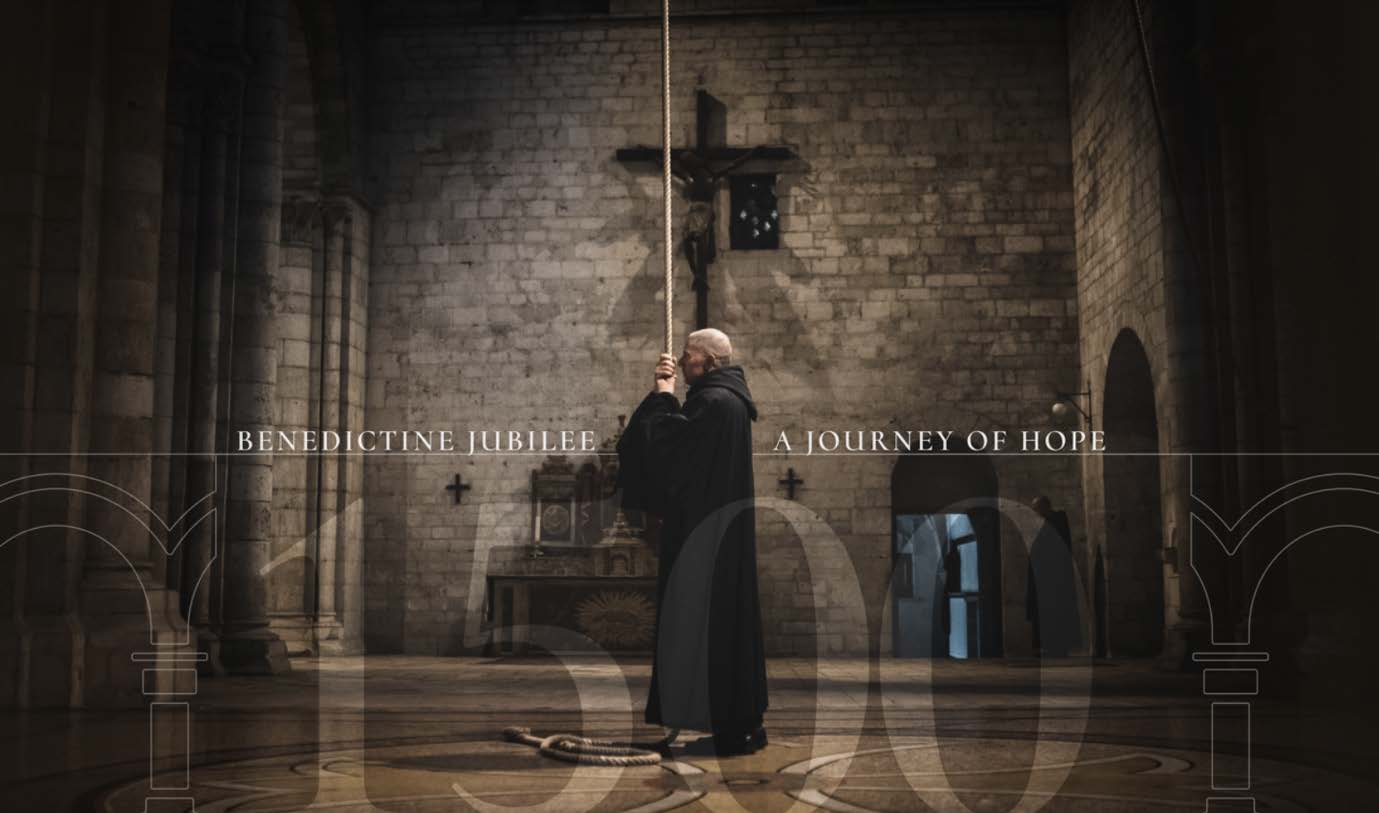
Fr François is not interested in preserving all this under glass. As the Benedictine family prepares for its 1500th Jubilee, he warns against a “lazy inheritance”. “The heritage need[s] to keep growing,” he says. “It needs to keep moving.” The real work, in his view, is for each generation to plant for the next: “things that we will not benefit from. We’ll be long dead and forgotten probably. But it is our responsibility.”
What would he say to someone who has never set foot in a monastery and never plans to?
“Visit Keur Moussa,” he says, and then he turns serious. “If you want to see humanity [at] its best, but also its lowest. I’m not saying we are perfect. Far from it… But it accept[s] its imperfection, because that imperfection is part of reality… It will change the way you see monasteries, the way you see monastic life and even maybe the way you see the Church.”
With thanks to Fr François Diouf
Keur Moussa Abbey is one of many global places of hope. Explore more using our interactive map!
Discover a new Highlight of Hope each month, sharing how Benedictine life is being lived in communities around the world. Subscribe to our monthly newsletter and journey with us from one place of hope to the next!