Allegra Giagu
Artistic Director, On This Ground; Music Collections Curator, New Norcia
Around two hours’ drive north of Perth, amongst the farms and open countryside of Western Australia, stands a town that seems at first sight more mirage than monastery.

New Norcia’s Spanish façades and Gothic arches give it an air of permanence, although the monastery is a relatively recent arrival on Yued Country. Nearby, the European Space Agency maintains contact with missions hundreds of millions of kilometres from Earth. The monastery helped the agency secure the land, and Abbot Placid Spearritt blessed the original antenna. Such arrangements seem less surprising the longer one spends here. As our Jubilee planning gathers momentum, I find myself wondering what else might evolve in this small town, and how far it might travel.
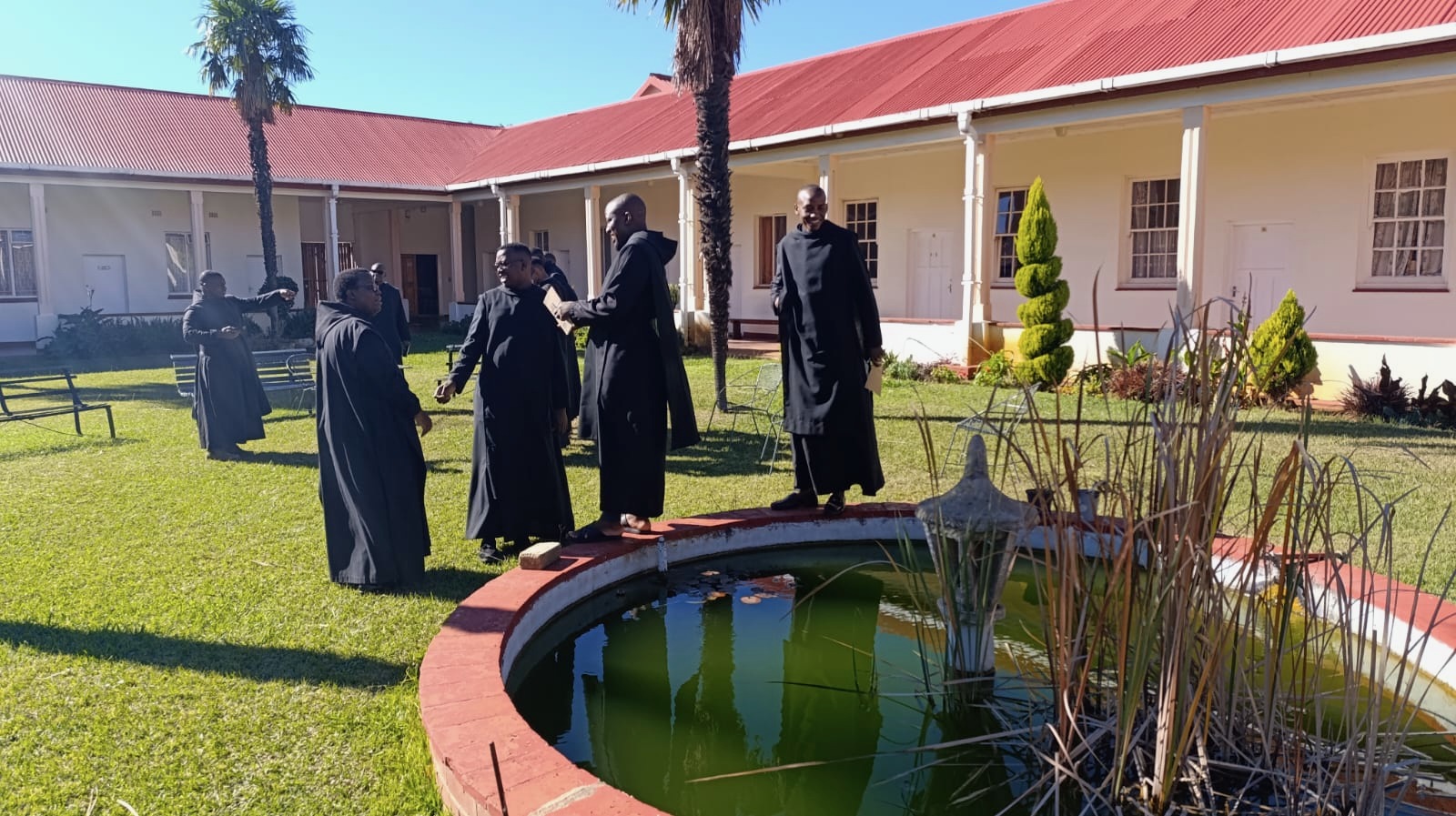
New Norcia is a cave of wonders. Tucked into countless spaces are collections of historic music and instruments, apothecary bottles, and generations of typewriters, radios, telephones and televisions. A plastic picnic chair sits beside a throne; a baptismal bath is metres from an unused coffin. Every day, the small and vibrant community of monks gathers for prayer, following the Rule of Saint Benedict and welcoming visitors ‘as Christ’ from across the globe.
For Benedictines, listening begins with Christ and the Rule’s invitation to listen with the ear of the heart. For our artistic work, it asks something practical too: that what we learn should be allowed to change what we create.
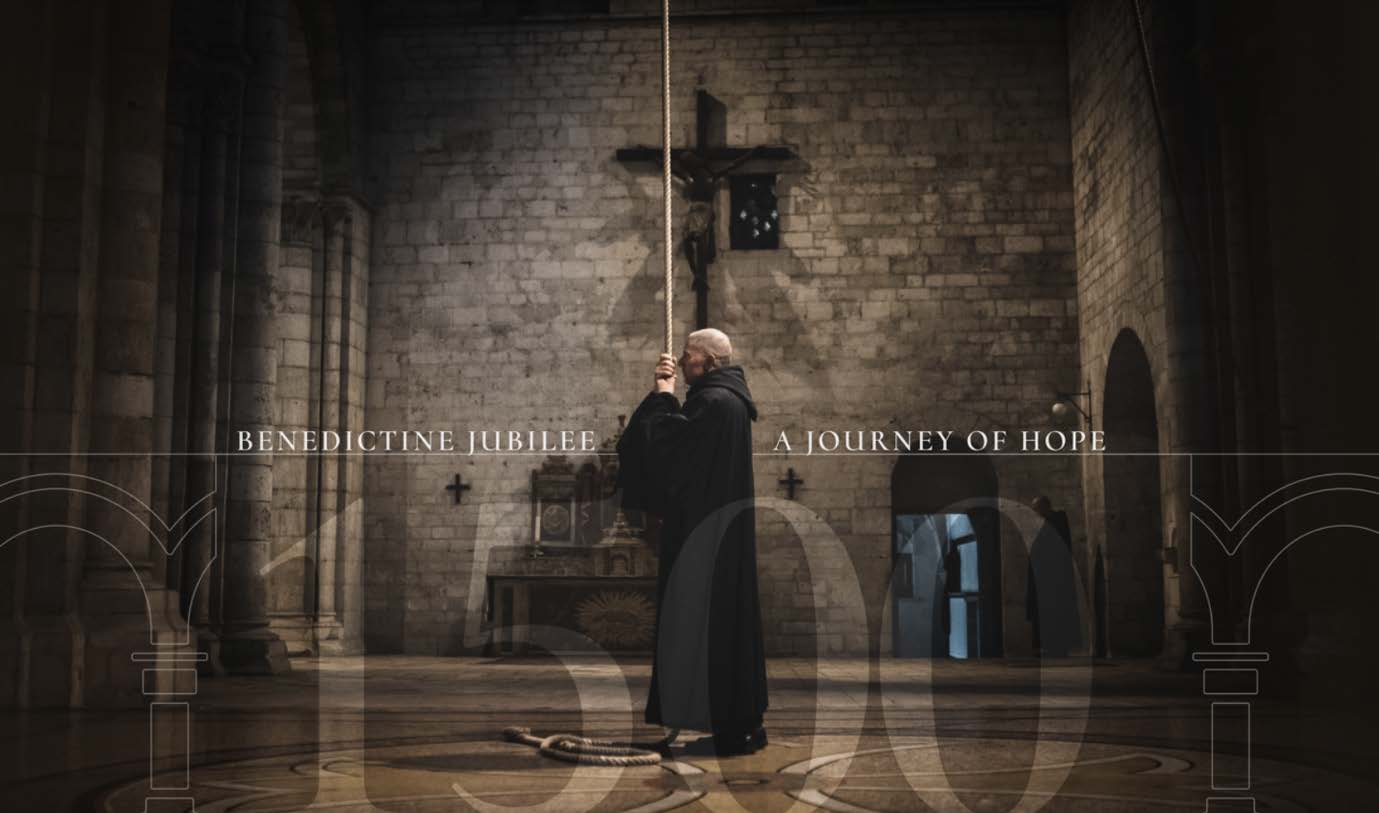
Pope Leo XIV has spoken of music’s transformative power and its capacity to lift the heart and connect earthly experience with God: “It opens up a new horizon before us and awakens within us the desire to move towards it.” This is the starting point for On This Ground, which we are developing as New Norcia’s cultural response to the Benedictine Jubilee, Places of Hope since 529. The Abbot Primate has invited communities to respond in ways that reflect their own circumstances, and so it is with music and artistry that we hope to bring depth to our Jubilee journey.
The journey is shaped by four intentions, one for each year towards 2029: Awaken, Listen, Grow and Flourish. The wider Benedictine Jubilee gives us the framework, but our hope is that the awareness it generates will continue to enrich life at New Norcia well beyond 2029.
For Awaken, in 2026, we have been looking more closely at the collections here, listening for the echoes of lives lived around them. Music was part of New Norcia’s formation long before it became a subject for research.
Rosendo Salvado arrived in Western Australia in January 1846, a Spanish Benedictine and an accomplished pianist and organist who had travelled from the abbey of Cava in Italy. In February of that year, he and José Benito Serra travelled inland with a missionary party sent by Bishop John Brady. Aboriginal guides accompanied them into the Victoria Plains, on Yued Country. Their first camps preceded the permanent settlement of 1847. In those first months, the immediate problem was survival.
By late April, food was running short. Salvado set out towards Perth with an Aboriginal companion who, he recalled, consistently gave him the larger portion of the food they shared. They ate grubs and roasted lizards along the way, which he found made “a tasty mouthful, at least in these circumstances”. At night, he said his prayers and stretched out on the grass “with a peace and satisfaction that the happiest man on earth might well envy”.
In Perth, Bishop Brady could offer little and suggested that the missionaries withdraw to the city. With the bishop’s approval, Salvado instead proposed a concert. “Once there was question of saving the Mission,” he wrote, “there was nothing in the world that could have embarrassed me.”
Help came from beyond his own Church. The governor provided the hall, while a Protestant printer supplied the programmes. An Anglican minister lent candelabra, and Mr Samson, whom Salvado identified as Jewish, arranged tickets and invitations. Ursula Frayne, who had travelled to Western Australia with Salvado aboard the Elizabeth, was leading the Sisters of Mercy in Perth at that time; and they provided him with a piano.
On 21 May 1846, he faced “a distinguished and thickly packed audience” at the Perth Court House. In his memoir, he recalled his ragged habit and trousers patched in different colours. His socks, at least, were “fairly respectable”. He had darned them. But the good shoes he had bought in Italy had “parted company with their soles somewhere in the Australian bush”, leaving his toes “kissing Mother Earth”.
He recalled playing for three hours with the applause never reaching beyond his ears, as his thoughts were so consumed by worries for his starving companions in the bush. The proceeds bought critical provisions; finding bullocks to carry the shopping home took several more weeks.
His concert depended on people beyond his own community, and throughout his life Salvado continued to connect New Norcia with the wider world. He even sent eucalyptus seeds from Western Australia to Galicia. To see Australian gums growing in Galicia is to feel those distant histories draw a little closer.
I began exploring New Norcia’s music archive in 2024 as the Abbot Placid Spearritt Memorial Scholar. Based in Melbourne— “over East”, as it is known here—I had been tipped off by my academic supervisor about a possible collection of Spanish music in Western Australia. For a performer and researcher completing a PhD in eighteenth-century Spanish music theatre, the archive here seemed like a dream. Where else might I put such a particular set of interests to work?

Peter Hocking, our exceptional archivist, and the Benedictine community made me feel instantly at home. I began opening dusty boxes of music in a far corner at the top of the monastery. Abbot John, who had a former life as a chef in Melbourne (and knew my parents were also in the game), would visit bearing delicious creations for me to gobble up as he tested recipes for his famed Abbot’s Table dinners. The monks and Sister Hilda—a former abbess with us on sabbatical—came to visit and offer their help. I found no shortage of questions to ask them.
Thousands of sources later, I find myself installed as New Norcia’s Music Collections Curator, with a responsibility that reaches beyond the collection. Here, that includes acknowledging histories we cannot undo: the dispossession of Yued people and the lasting harm of abuse within our former educational institutions. That acknowledgement must remain a constant companion to our hopes.

These questions also sit at the heart of our first On This Ground commission with Noongar composer Aaron Wyatt. Among the sources he will consider is Salvado’s piano arrangement of Maquieló, which Salvado described as an Aboriginal dancing-song. During my scholarship research, I found a melodic fragment with accompanying text that I believe may preserve a sung component of the piece. Supported by the John Mulvaney Fellowship and the monastery, Aaron will consider both sources as he develops a major new work. We hope, with guidance, to deepen our understanding of the music’s origins and context.
Aaron has described the commission as an opportunity to address an absence in music written about New Norcia: while composers have responded to the monastery, its spirituality, Spanish inheritance and bells, Indigenous people whose connection to this Country long predates the town have rarely entered that musical picture. He sees the project as a chance to embrace truth-telling and, in his words, begin to “correct the record in the canon of repertoire”.
Our recent Studies Day featured three musical papers, including Associate Professor Paul Watt’s research into New Norcia’s Gregorian chant books. His paper sat alongside my ongoing research into Salvado’s musical world, and a virtuosic lecture-recital at the piano by Fr Robert Nixon OSB. All three will be published in the New Norcia Studies journal next year. Fr Robert has also proposed English translations of two lesser-known medieval writings from Montecassino for the Jubilee.
As our final project of Awaken, violinist and musicologist Dr Shane Lestideau has agreed to join us in December to help identify our string instruments and recommend which are worthy of restoration for future Jubilee projects. We are also excited to know what she makes of our restored violin, once believed to be a Stradivarius and now identified as a valuable copy, and hope to create an opportunity for her to bring it to life.
Alongside this research, we have been quietly exploring one of the mysteries of New Norcia’s instrument collection with Australian bandoneón expert and composer Owen Salomé. The New Norcia bandoneón—a bellows-driven instrument associated with tango—is an Alfred Arnold from the 1920s. We wonder whether it might have been acquired as a portable instrument for religious music, one of the bandoneón’s earlier intended uses, before it became so closely associated with Argentine tango. It is in exceptional condition for its age. Owen jokes that a comparable instrument in Argentina would be growing mushrooms by now!
Its restoration would involve an elaborate web of exchanges through touring tango dancers and a trip to Buenos Aires. If the restoration is successful, one of our projects for Listen in 2027 will return rare 19th-century Spanish theatre music from the archives to the monastery and to the spaces where it once spilled out onto the verandas and courtyards. We hope to recover traces of that social musical life and ask what the music itself reveals about memory, belonging and what home has meant to different people in this place.
There is more here than any one programme could contain. The Jubilee gives us a way to choose, with each year offering a different approach to New Norcia. Through our programming in 2027, discoveries will begin to find their way out of the archive and into performance, recordings and new artistic work. Part of Listen will be paying attention not only to the music itself, but to the company it keeps how a familiar work can shift when heard beside something new, and how one piece might illuminate another in ways we had not anticipated.
For Grow, in 2028, questions of belonging and community will shape our programming. New Norcia’s history gives us reasons to think carefully about the demands communities make of people, and what people make possible together. What we learn through the earlier programmes will inform the work we commission and present. There will be room for different artistic responses, including those that challenge our understanding.
Flourish, in 2029, brings these years into the wider Benedictine Jubilee. With humility, we hope to welcome people in a way that will allow them to experience their own relationship with this place. The anniversary will pass, but our responsibilities to place and people will continue long after the celebrations. What we build through On This Ground needs to be worthy of being carried forward.
You will be able to follow our research, explore the developing programme and find opportunities to take part through the new On This Ground webpage.
We cannot wait to welcome you here.