Everything begins with baptism. For Benedict and Scholastica, as for every Christian, the call to holiness is rooted in God's gift. Baptism is a gift of mercy: original sin is forgiven. It is also a gift of love: trinitarian life is infused.
The seed is sown, bearing an immense energy of divine life. The seed is cultivated in the life of the family and the Christian community. The family, the domestic Church, and the parish, the local Church, transmit the gift of faith: the knowledge of the Father and the experience of His love. They support the first steps of life in Christ. They educate in fraternal charity, obedience, and humility.
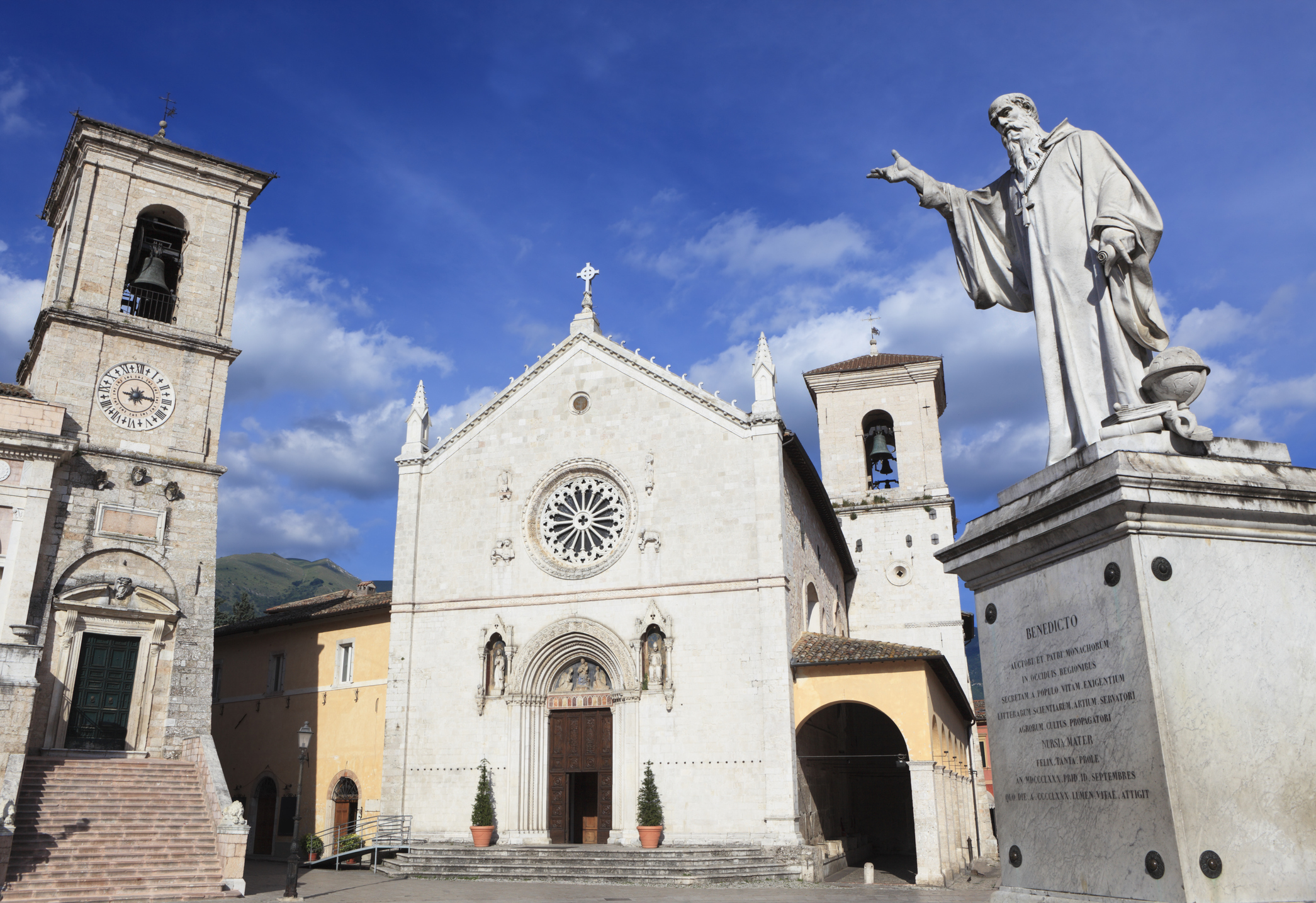
Subiaco and Monte Cassino germinated in Nursia, where Benedict grew "in grace and wisdom before God and man." In his era of widespread Arianism, he was instructed in the orthodox faith. He confessed the Son's consubstantiality with the Father. He received the Eucharist. He learned to place his entire life under the sign of the Paschal Mystery.
Baptismal life is eremitic. It establishes a unique personal relationship between the Father and each of his children. Under the Father's gaze, fear blossoms into love, service becomes freedom, and the individual reconnects with his or her deepest identity. The child Benedict is the father of the monk and the abbot, the hermit and the superior. He is a friend of solitude and silence, which open him to God alone. He has learned to listen to the voice of the Holy Spirit and to obey His promptings. Prayer springs forth from a source in his heart. The Word of God dwells in his memory. Spiritual desire gradually motivates his entire being.
Baptismal life is cenobitic. It integrates one into the community. It leads us to the Eucharist, where it is renewed and deepened Sunday by Sunday, day by day. It turns us toward our brothers and sisters, who are the closest presence of the Risen Lord, to be served and loved, especially in his suffering and weakest members. It sends us to the peripheries where the Holy Spirit is at work, turning hearts toward Christ and preparing them to receive the proclamation of his Gospel.
To go to Nursia in the footsteps of Saint Benedict and Saint Scholastica is to visit the baptismal sources of our monastic life. Each person is invited to meditate on his or her personal story and to reconnect within him or herself with the child of God that baptism has made him or her to be.
The monastic vocation gives baptismal consecration its maximum ecclesial visibility. The monk and the nun are signs of the reality of the Trinity's love for every man and woman. The community is the sign and the fruit of the charity it celebrates in the liturgy.
Each day, baptism sends us into the desert in the power of the Spirit to encounter and serve the living God.
Each day, baptism urges us to make of our lives a gift for the Church so that God may be glorified in all that we do and all that we are.

.png)