As the Benedictine Jubilee approaches, monks, nuns and sisters look to rediscover their roots in our great founder. Norcia is a good place to start. Local tradition says that it was holy women who were the first to live and worship at a chapel built around the holy twins’ birthplace and only one or two centuries later did monks take up their abode there. They each saw it as another Bethlehem, a way of reaching back to the birth of the founder and drawing new life. In fact there is a 13th century fresco in the crypt where the event is supposed to have occurred which depicts the Annunciation, the birth of Christ, and the birth of Sts Benedict and Scholastica.
When our monks first reopened the monastery in Norcia, closed since 1810, it was in this place. We often hoped that a rebirth of monasticism could occur there not just in our own modest beginnings, but that we and all those who visited there might discover something of the spirit of our patron that can’t be found elsewhere. When the great earthquake of 2016 destroyed the basilica and our home attached there and we had to move outside the city walls, we followed a path of so many abbeys around the world which offer a setting somewhat removed from the bustle of the world.
This was a great blessing to our sense of peace but it allowed us to reflect on the location of our first 16 years in a different way. St Benedict grew up in a busy provincial town, compact and full of life. Although he was sent for his first studies to hermits in the valleys around Norcia, his own experience of local life would have shaped him. Not only the constant presence of his twin sister, but the curious and affectionate townspeople would have surrounded him, sharing their joys and sorrows, and their not always discreet questions. When we lived as monks there, we often felt like our life overlapped with theirs in ways that could be fruitful but challenging. This too would have been his life.
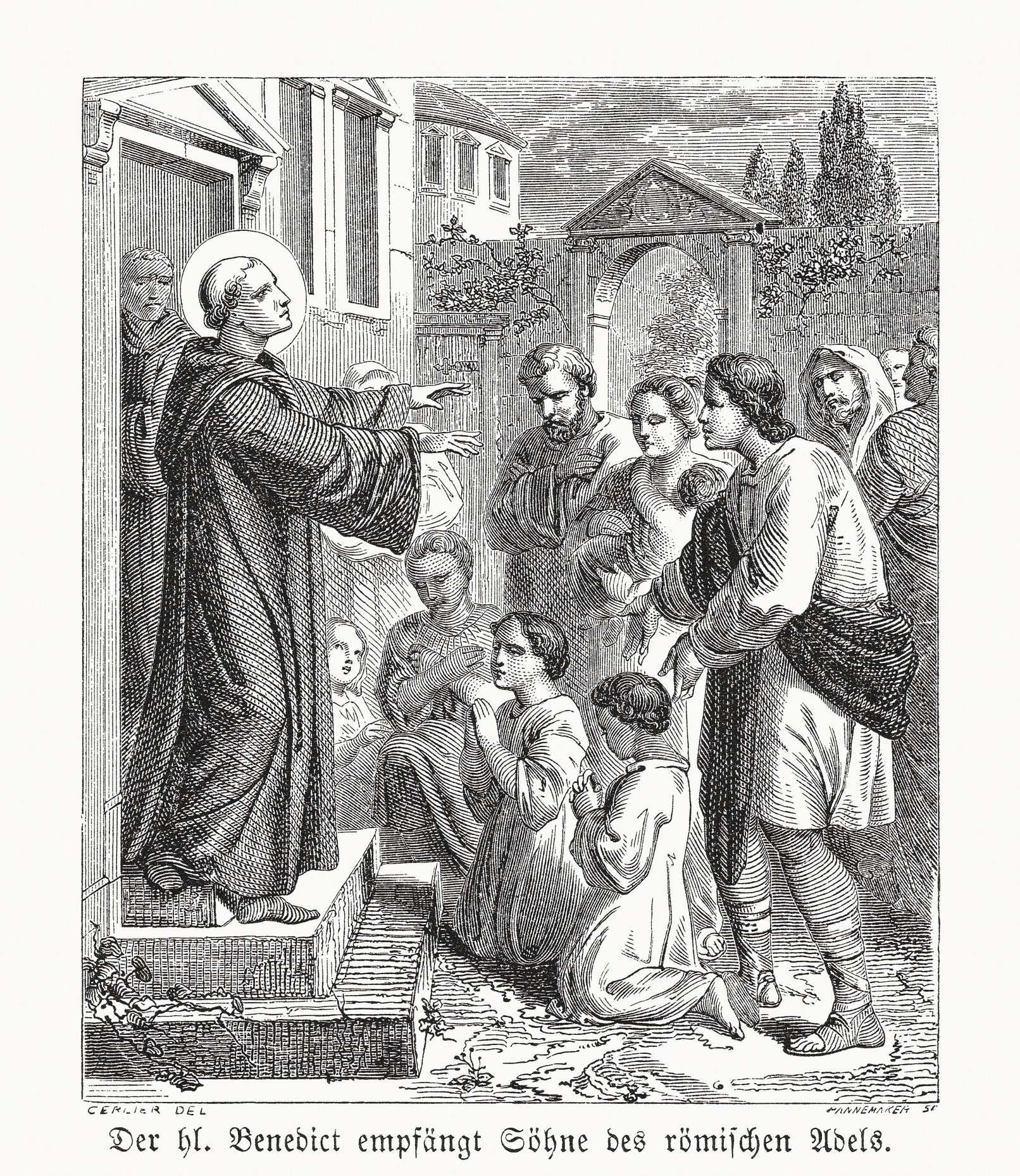
For many monks, nuns and sisters around the world, the daily common life provides great joys and also great troubles. A visit to Norcia helps one to see that our founder lived an intense common life, long before he founded Subiaco and Monte Cassino. As we all do, for better or worse, he brought his childhood with him, creating little compact walled towns of monks, eventually preferring this to the eremitical examples of his youth. His rule was the antidote to the natural disorder we all bring with us when we come together. We hope all who visit Norcia in these coming years can discover the man, his rule and the town that formed them both.
.png)